Redeveloping the hospital site - analysis and territorial foresight
PROJECT PERIMETER
10 Ha
STUDY AMOUNT
200,000 + €30,000 consultation costs
LOCATION
Moulin du Pé hospital site, Saint-Nazaire (44)
PARTNERS
BERS, Francis Cuillier, Pierre Lascabettes, Guillaume Sevin Paysages, SCE Nantes, AIA, AUIGE
MISSION
Preliminary study: drawing up a guide plan with support for consultation and regulatory documents
PRODUCTION
Study in progress 2011-2017
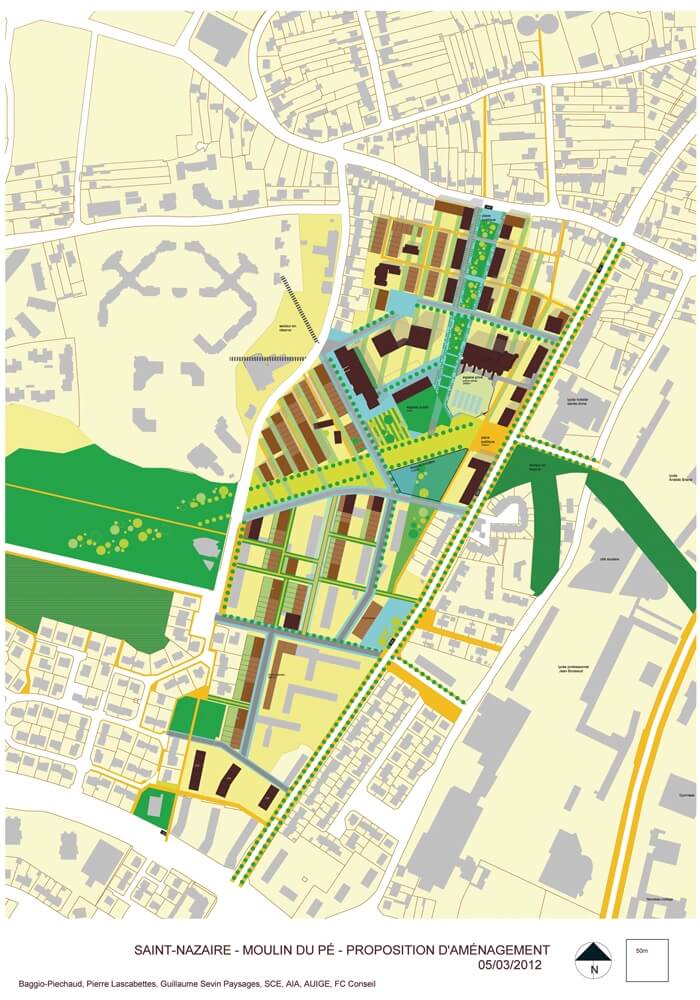
Redevelopment of the hospital site, analysis and territorial prospective. Preliminary study: development of a guide plan with support for consultation and regulatory documents.
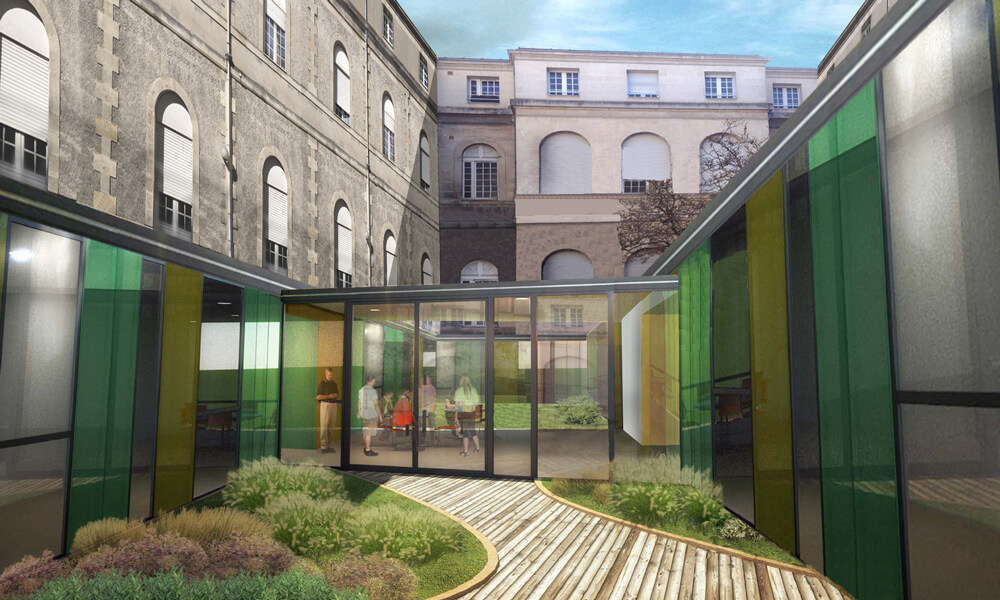
Conversion based on existing facilities
With 75,000 m² of floor space and 8.5 hectares built on almost the entire site, the Saint-Nazaire hospital center is one of the highest points in the city, from where you can see the estuary, the Brière, and all the city's districts.
It's therefore a strategic site for the town, and one that's located at the center of a number of facilities (the cité scolaire, the plaine des sports, the landscaped park, the bois d'Avalix, the bois Joalland pond).
These initial findings led us to propose 4 key ideas to begin sketching out this new piece of town, 4 different ways of approaching the development of the site:
the inhabited structure: reasoned deconstruction, making do ;
the crossroads of boulevards: natural and urban boulevard, urban blocks and facades;
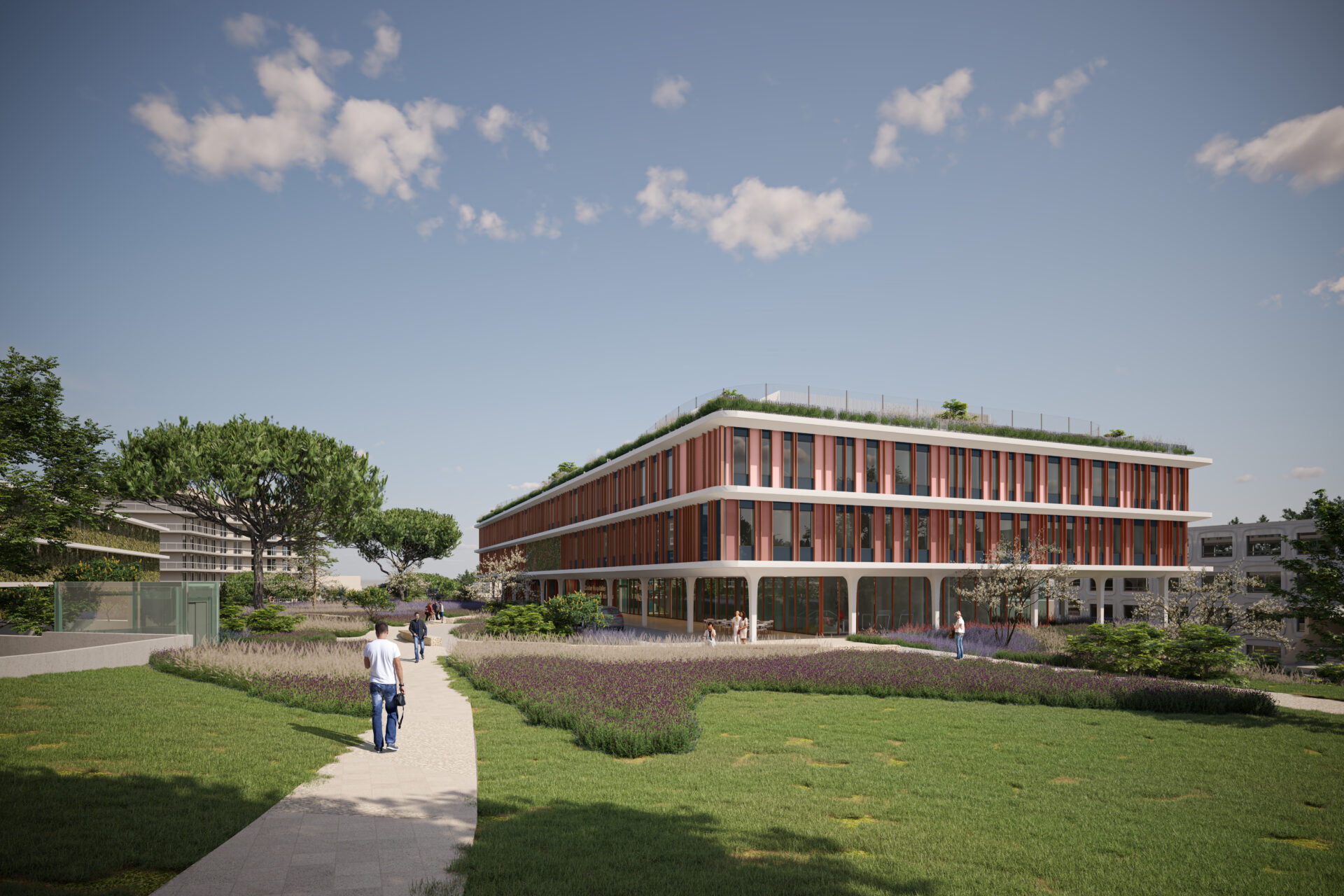
a balcony overlooking the city: public belvedere, amphitheatrical buildings ;
the inhabited hill: urban landscaping, reclaiming the relief.
Together with the residents, we refined our proposals during the Citizen's Panel meetings, taking into account their experiences, their knowledge of the area and their expectations (avoid excessive mineralization, make the area more accessible to all, build a variety of housing types ranging from single-family homes to apartments with terraces and breathtaking views... not forgetting intergenerational projects and the creation of local public spaces such as village squares).
These requests are in addition to the city's desire to design a neighborhood accessible to young people and young households.