Building reversibility, a lever for sustainable development
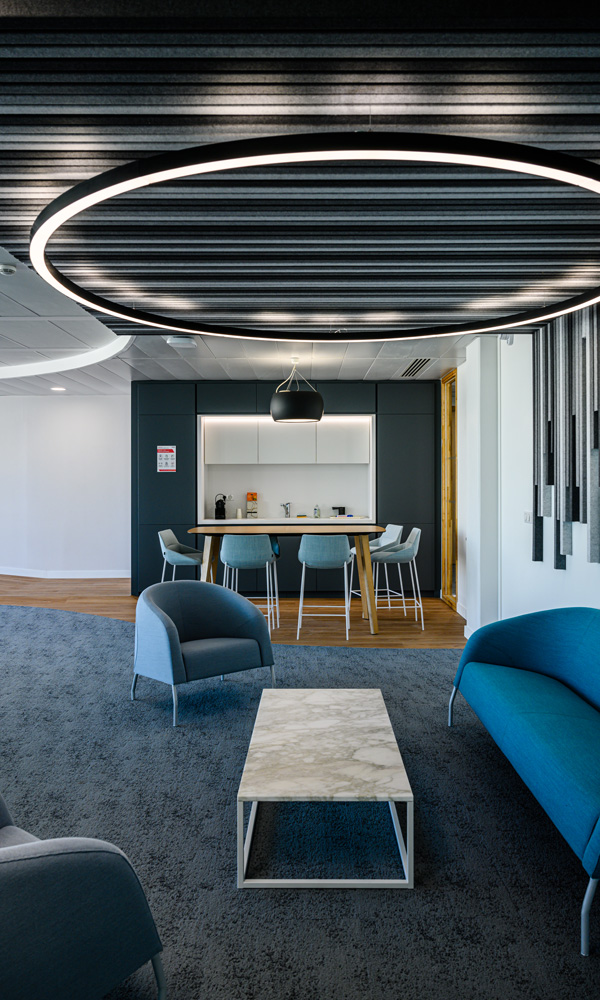
Ranked 6ᵉ among business schools in the latest Etudiant rankings, Skema has opened its new campus just outside Suresnes for the start of the January 2021 academic year. An architectural achievement that drew on the former Airbus headquarters site to transform these office spaces into a university campus of a new kind favoring a diversity of learning, co-working, relaxation and brainstorming spaces connected to meet the aspirations of students from generations Z and beyond. Or reversibility in action by A26.
More than ever, buildings need to be able to evolve and adapt to a changing economic context, a change in usage such as that triggered by the pandemic, and a technological revolution such as digitalization.
The initial design of a building is not always conducive to efficient reversibility, notably due to restrictive construction systems. On the other hand, the intelligence of structures such as the "post/beam" concept lies in their ability to free up surface areas and create large, open floor plates. This constructive system allows us to design in such a way as to keep the possibilities open.
Specializing in this kind of building reversibility, A26 has just come up with two astonishing illustrations of this strategy of intelligent reuse of existing buildings: a fitness center in a former service station, and above all the brand-new SKEMA campus in Suresnes (92), deployed within the former Airbus headquarters designed on this post-and-beam model.
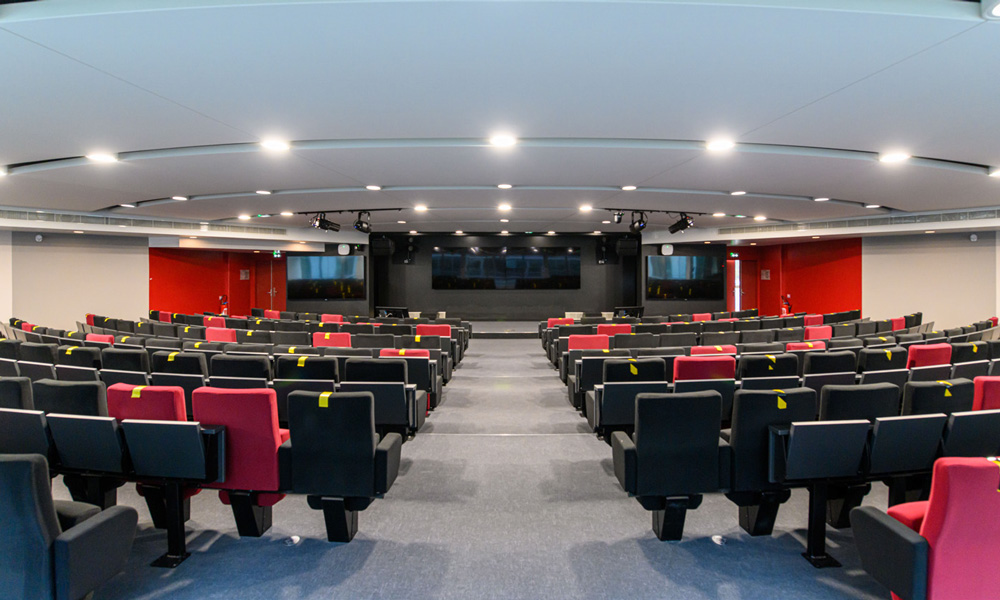
"By taking advantage of this layout, we even managed to integrate a 300-seat amphitheater into an office building," enthuses Marc Seifert, partner at A26. "Our teams, led by Carole Houssin, Leslie Blain and Chama Mejbar, took up the crazy challenge of offering a wide variety of spaces for up to 1,500 students, where Airbus employees numbered just 600.
is based on the desire to take advantage of the existing building to think virtuously about sustainable development, while creating a resolutely new living environment for users with clearly different expectations and uses for the building".
On the same subject
This website uses cookies to enhance your web experience.